- Home
- News
- ARTP supports latest edition of Sleep Health Campaign
ARTP supports latest edition of Sleep Health Campaign
18 March 2022
ARTP is delighted to be a part of the latest edition of the Sleep Health Campaign developed by Media Planet.
Read about the role of good sleep hygiene and the lifestyle changes needed to maintain sleep quality, as well as the technology and innovation available to help via healthawareness.co.uk. The campaign is also being distributed with the Guardian today.
The ARTP Sleep Committee, led by ARTP Sleep Chair Sara Parsons, have written an article titled 'Don't underestimate the importance of a good night's sleep' which can be read on the Health Awareness website.
Please see the full article below, or click here to read the article on the Health Awareness campaign website.
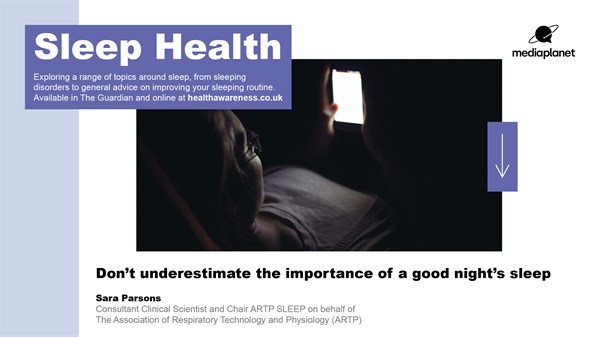
Don’t underestimate the importance of a good night’s sleep
Can’t sleep? Terrifying dreams? Falling asleep during the day? Sleeping around the clock or ‘dying’ 35 times an hour every night? If you have poor sleep hygiene, it could be severely impacting your physical and mental health.
There are over 80 known sleep disorders including insomnia, night terrors, narcolepsy, circadian rhythm disorders and sleep-related breathing disorders such as obstructive sleep apnoea. According to the British Lung Foundation, obstructive sleep apnoea alone is estimated to affect 1.5 million people in the UK.
The development of sleep problems increases significantly with poor “sleep hygiene”; our behaviours during the day and our bedroom environment, which affect the amount and quality of our sleep. Increasing use of digital technology is leading to internet addiction and significantly reduced sleep duration and quality. Bright light in the evenings from screen use can make it more difficult to fall asleep.
With the growth of sleep disorders, we are increasingly aware of the issues these can cause in our lives. Development of heart and breathing problems, obesity, cancer, type 2 diabetes and an association with the development of dementia can all be linked to poor sleep. It also impacts quality of life, reducing motivation, emotional instability and poor cognitive (brain) function.
Using support of sleep professionals
Sleep physiologists are involved in patient care from referral and diagnosis, through to initiation and support of patient therapies. They constantly toil to improve diagnosis, treatment and access for patients.
Sleep organisations, including the Association for Respiratory Technology and Physiology (ARTP Sleep) and the British Sleep Society (BSS), are collaborating with NHS England to improve education and training for health professionals.
Treating sleep disorders quickly and effectively
The goal is the development of national educational programmes, and improved patient access, to help diagnose and treat sleep disorders as quickly and effectively as possible. This includes increasing the sleep workforce and redesigning the patient journey.
One of the biggest barriers is the need to educate thousands of GPs and dental practitioners about sleep disorders and where they can be treated. The current aim is to take sleep services into the community and closer to the patient. This requires educating the public about good sleep health, promoting the importance of good sleep hygiene, and the awareness of sleep disorders, to improve overall health in society.
View other News